
My role
Senior Product Designer
Project type
Self-initiated concept / Internal initiative
Duration
Team
Industry
CardsChat had the audience but was losing the next generation of poker players to a brand and experience that felt a decade out of date.
Overview
CardsChat is a long-established online poker forum and community, offering everything from strategy guides and learning content to freerolls and real money game referrals. When I joined the team at iTech Media, a branding workshop had recently taken place but with no dedicated design resource, the findings had nowhere to go. The core hypothesis was clear: the site felt dated, skewed toward an older demographic, and was struggling to attract newer and younger poker players. We had just finished redesigning the CardsChat News site, and rather than treating the homepage as the next item on a list, I saw an opportunity to start with the experience rather than the aesthetics. The new logo, visual identity and homepage were ultimately the output of that thinking, not the starting point.
My Approach
Before any visual exploration, I needed to understand who we were designing for and what the existing product was actually communicating. User research on the existing site told a clear story:
Users found it cluttered, overwhelming and difficult to trust. Non-users described it as boring, serious and businesslike, hardly the impression you want to make on someone encountering the brand for the first time.
From there I developed four proto-personas to represent the range of people CardsChat needed to serve: the beginner finding their feet, the experienced player looking for credibility and serious game, the freeroller who just wants quick access to free tournaments, and the loyal long-term community member. Each persona came with distinct goals, pain points and priorities, and together they informed the key user journeys the new experience would need to support.
To explore visual directions I created three stylescapes, richly composed mood boards each communicating a distinct visual and tonal world. I then tested all three alongside a stylescape based on the existing CardsChat styling, across three participant groups: existing forum members, first-time CC users, and non-CC users. The results were telling. The existing styling was consistently described as boring, confusing and corporate, particularly by non-users. The new directions landed as modern, colourful and exciting across all three groups. Stylescapes A and B performed especially strongly, and both pointed clearly toward a more contemporary, approachable visual identity.
With a validated creative direction in hand, I moved into design. The work spanned a new logo, a refreshed colour palette and typography system, bespoke UI components and custom visual assets including poker table and card graphics, as well as a full homepage redesign and mapping of key user journeys covering forum access, freerolls and learn-to-play pathways.
Key Design Decisions
The logo concept was one I invested significant time in, and the process behind it is worth walking through. The concept was straightforward: a spade for "Cards" and a speech bubble for "Chat", merged into a single mark. What made it work was the execution, pages of hand-drawn sketches, iterative digital refinements, and a final form built on geometric construction that made it feel considered and deliberate rather than assembled. Placed against the competition, a landscape dominated by dated and heavy-handed logos, the proposed mark felt genuinely distinctive.
On colour, blue remained a deliberate anchor. There was appetite to retain continuity with the existing brand, but the blue I landed on was meaningfully different: more vibrant, more confident, and paired with a supporting palette that felt modern rather than inherited. Lato gave way to Poppins, a shift that might seem subtle but had a real impact on the overall tone, moving the brand from functional to friendly.
Throughout, every decision was made with the newcomer in mind. Approachable enough not to alienate, credible enough to keep the community that already trusted the brand.
72%
of 50 users preferred the new homepage in a direct comparison test
76%
of under-40s favoured the new design, directly validating the goal of attracting a younger audience
137
participants across three research rounds shaped the final direction
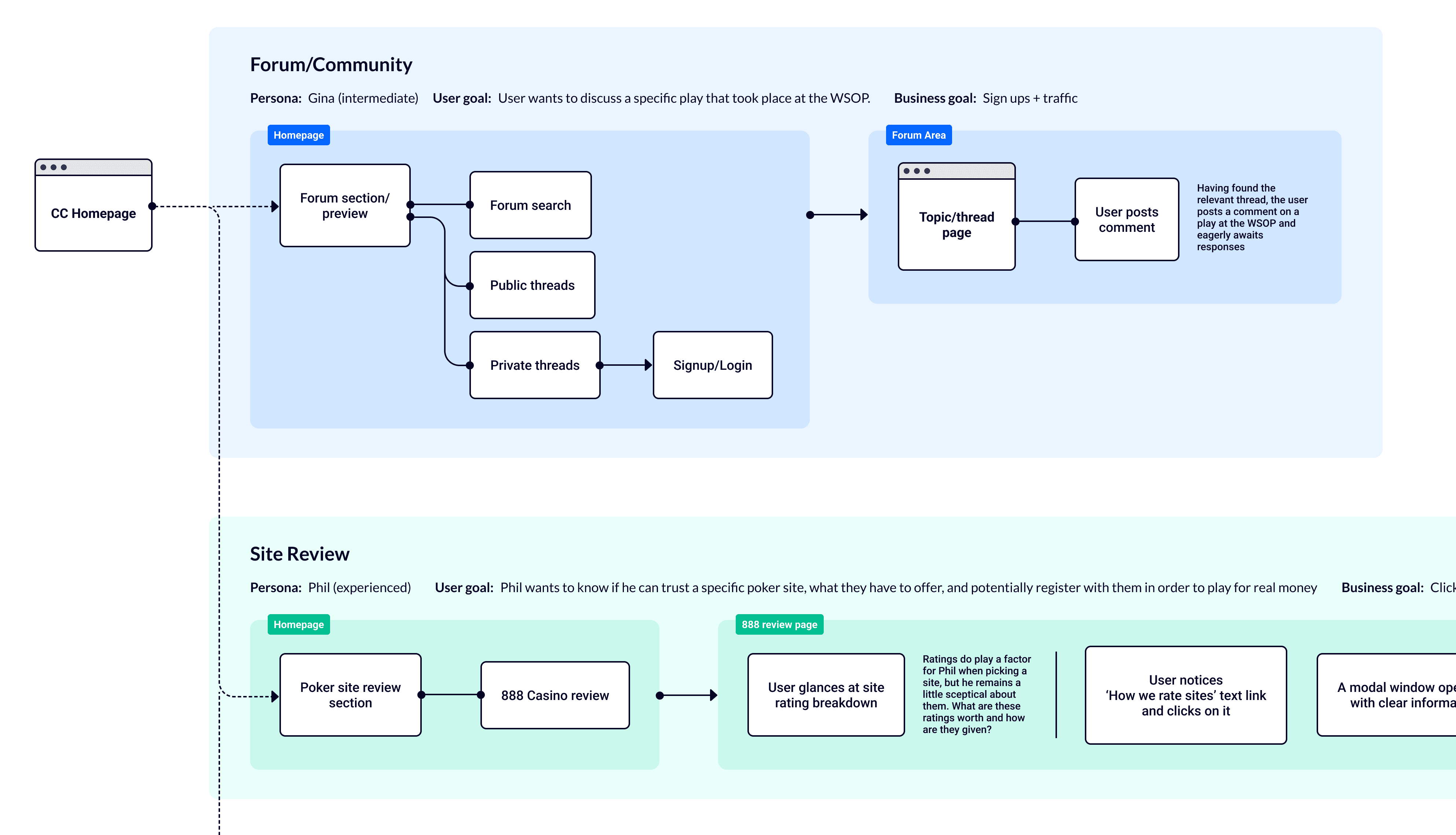
User journey flow diagram: Mapping the key paths through the new CardsChat experience: joining the forum, accessing freerolls and bonuses, and learning how to play poker. The four proto-personas shaped which journeys to prioritise and how each one should feel.
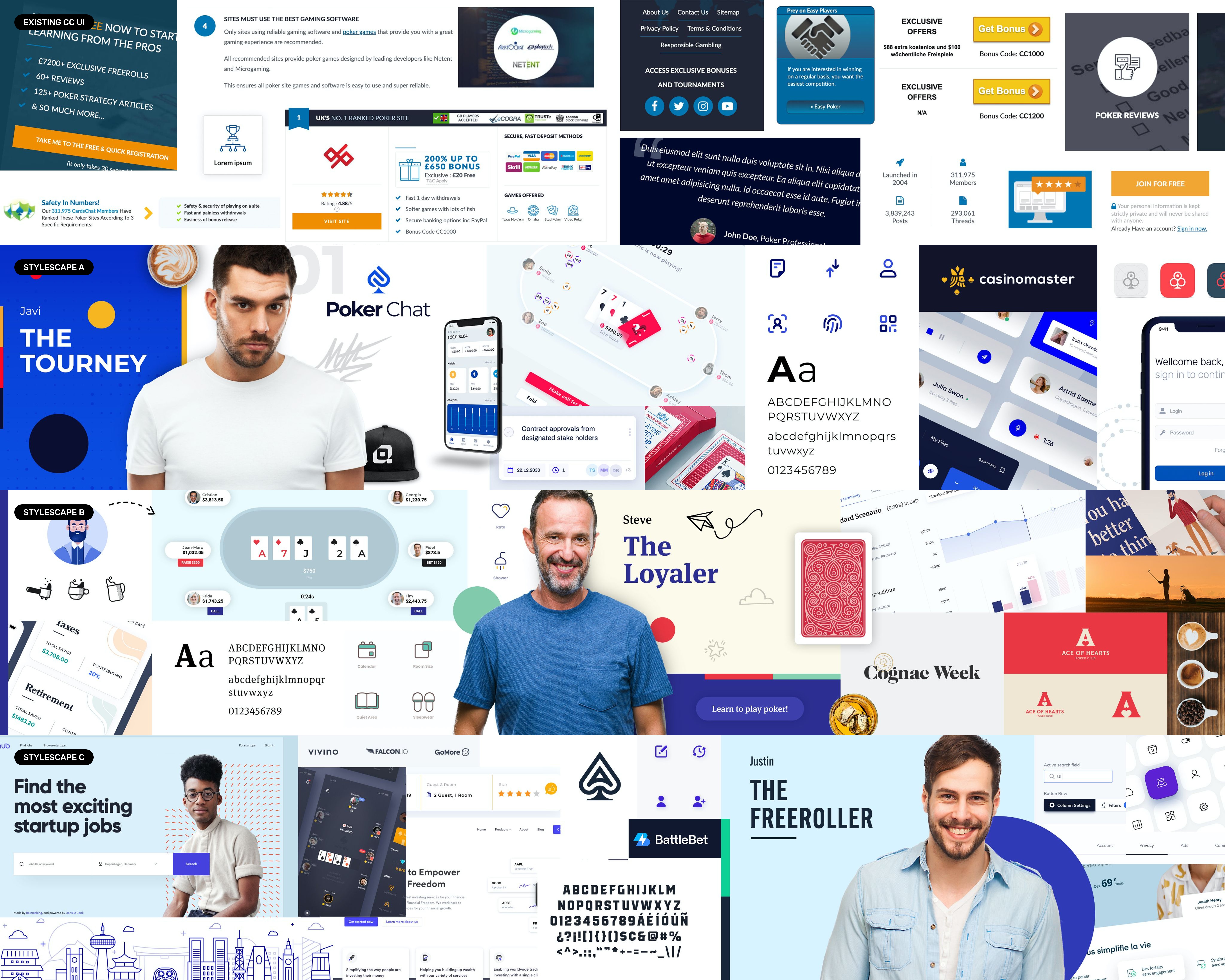
Stylescapes stacked: Three visual directions explored during the rebrand, each grounded in a distinct user persona. The stylescapes were tested across 137 participants to validate which direction resonated most before a single UI element was designed.
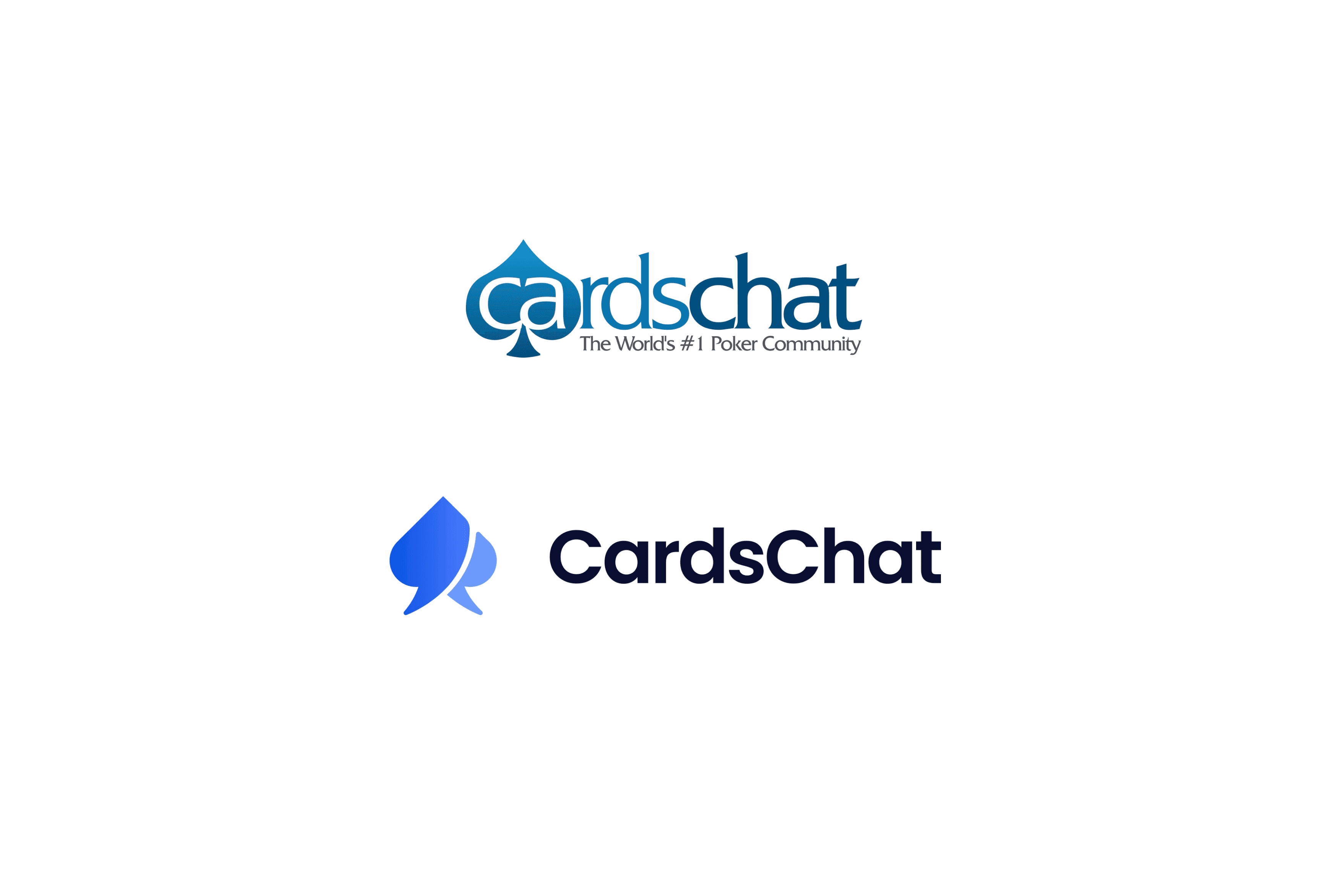
Old logo vs new proposed logo: The existing logo had asymmetric letterforms, inconsistent weights and an unclear icon. The proposed mark merges a spade and a speech bubble into one clean, purposeful symbol built to scale.
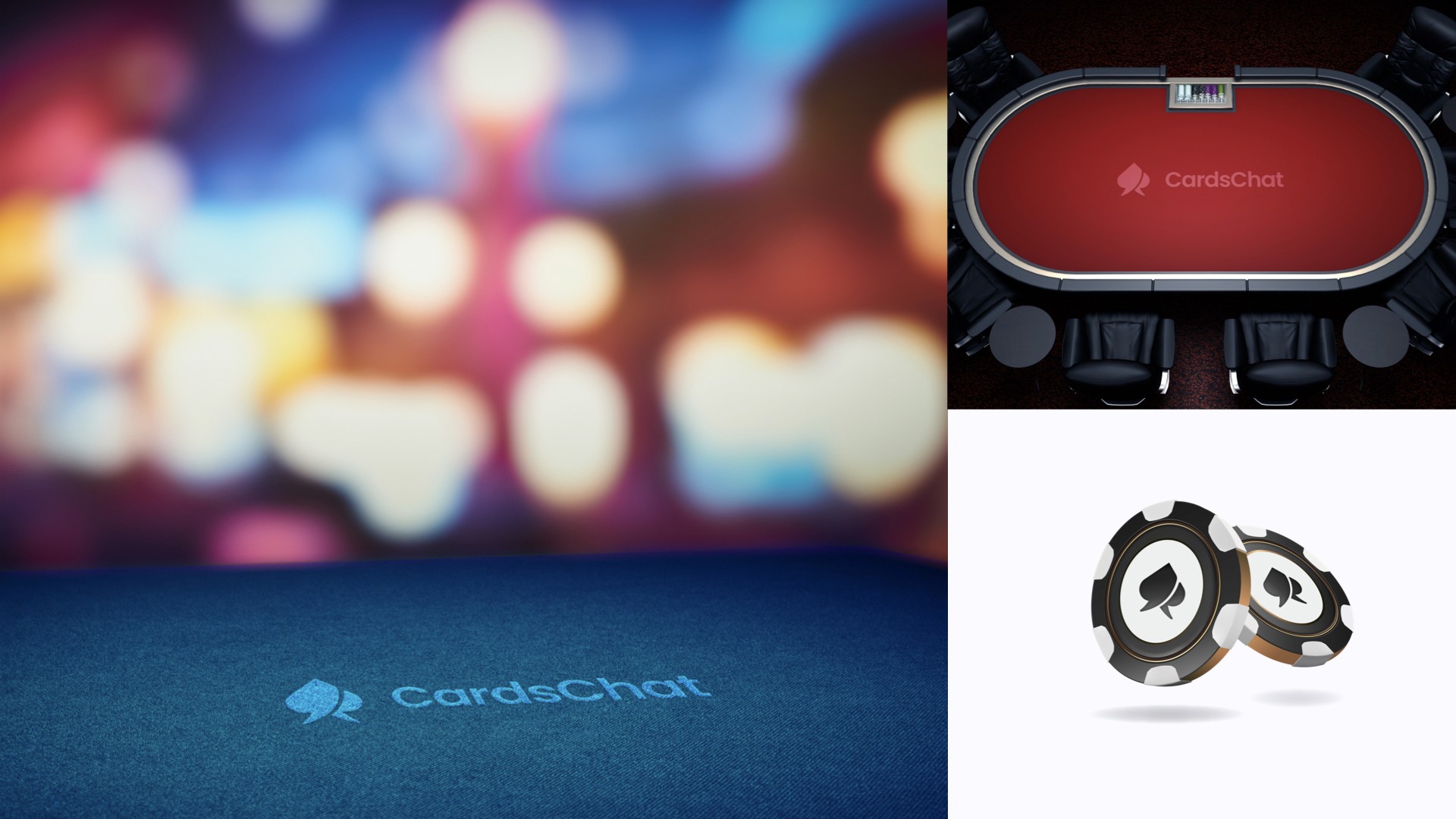
Logo on poker assets: Bringing the new identity to life on poker tables, chips and branded merchandise, making the vision tangible for stakeholders and demonstrating the versatility of the mark.
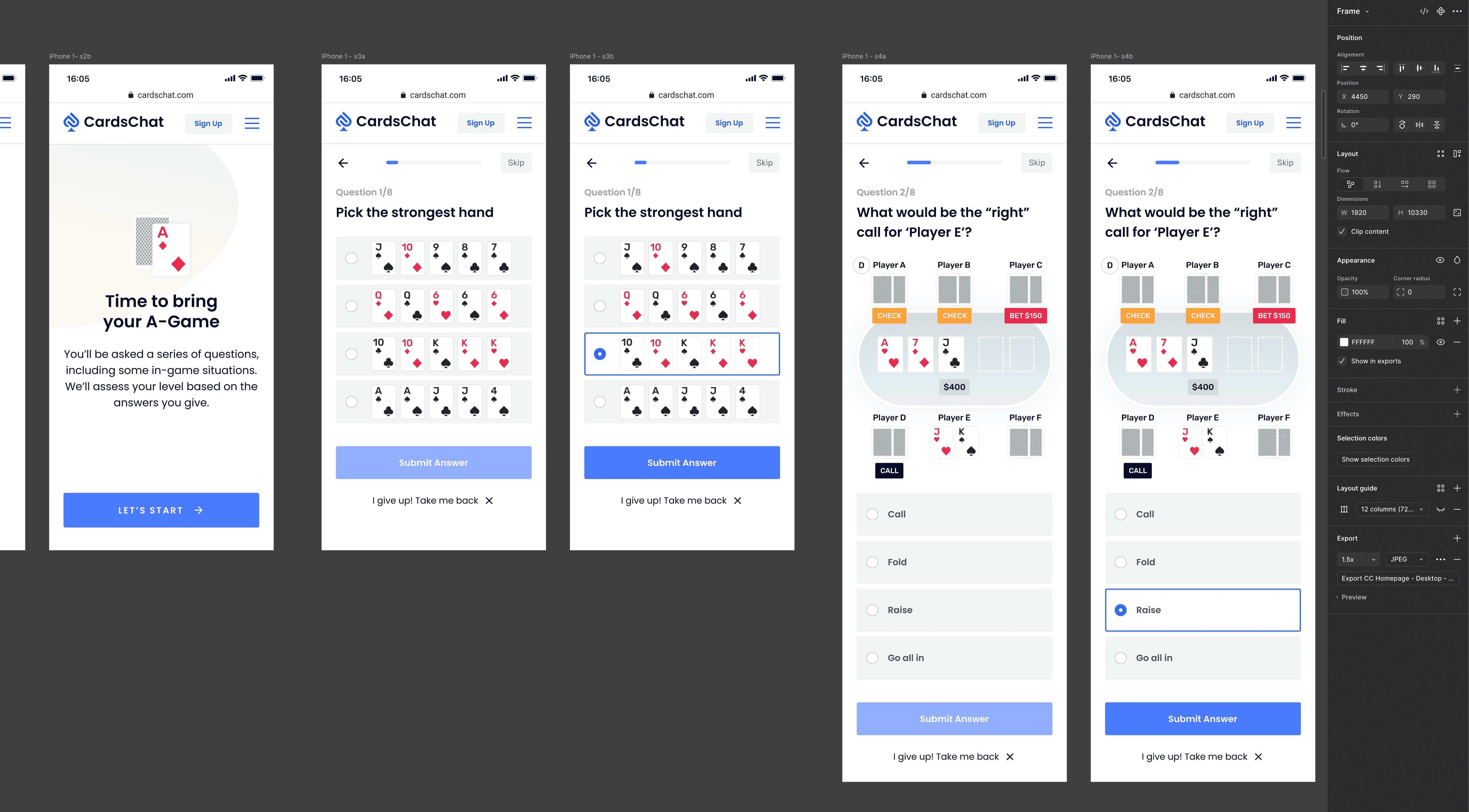
Poker knowledge assessment feature (mobile): A feature concept designed to personalise the CardsChat experience from the moment a new user arrives. By assessing a player's existing knowledge and skill level, the product could surface the most relevant content, journeys and recommendations straight away.

Homepage wireframe: The structural blueprint for the new homepage, focusing on hierarchy and user flow before any visual styling was applied, designed to serve multiple user types without overwhelming any of them.
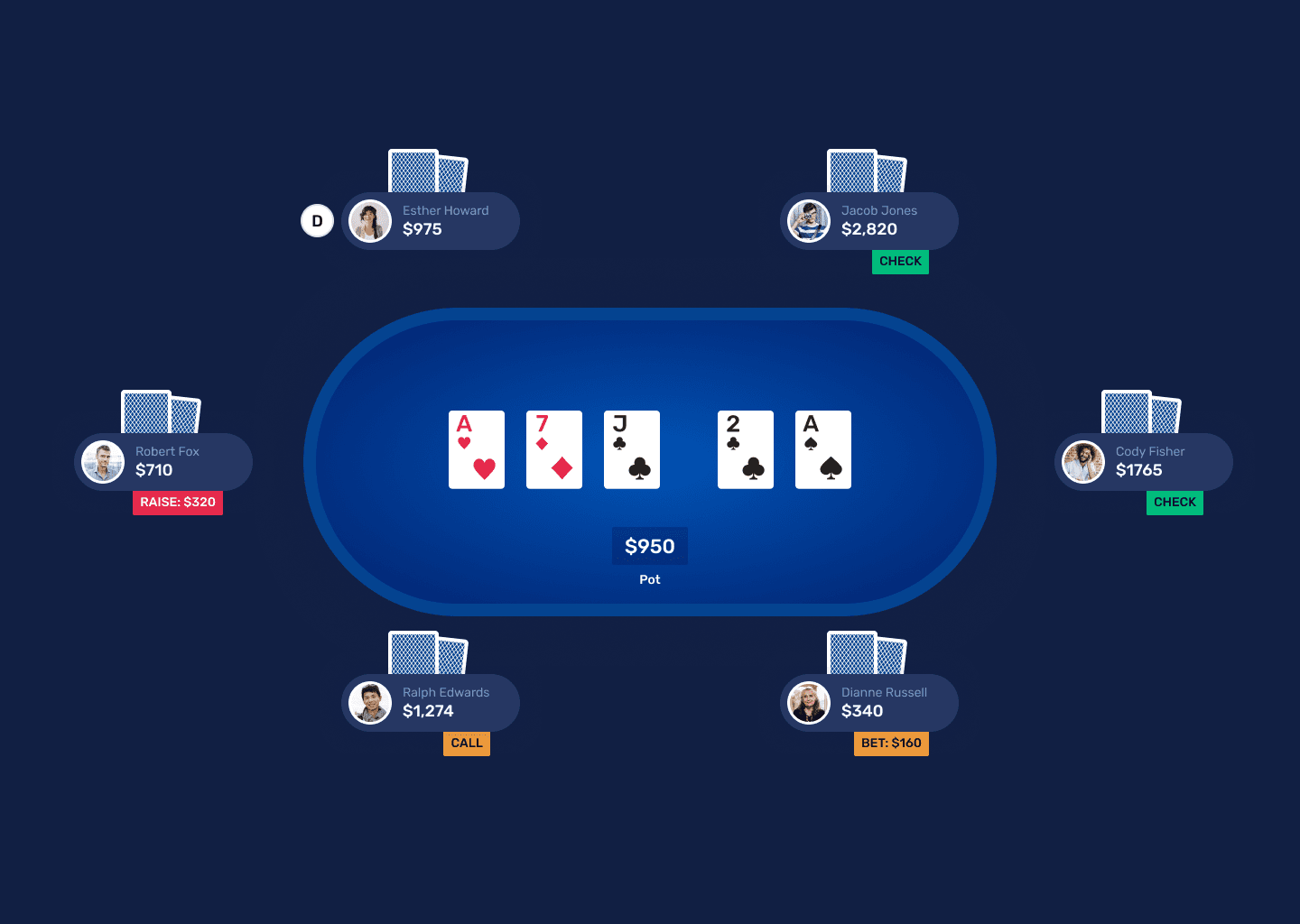
Custom poker table UI: A bespoke poker table illustration with player avatars, designed as a reusable asset across learning content, onboarding flows and interactive features throughout the site.

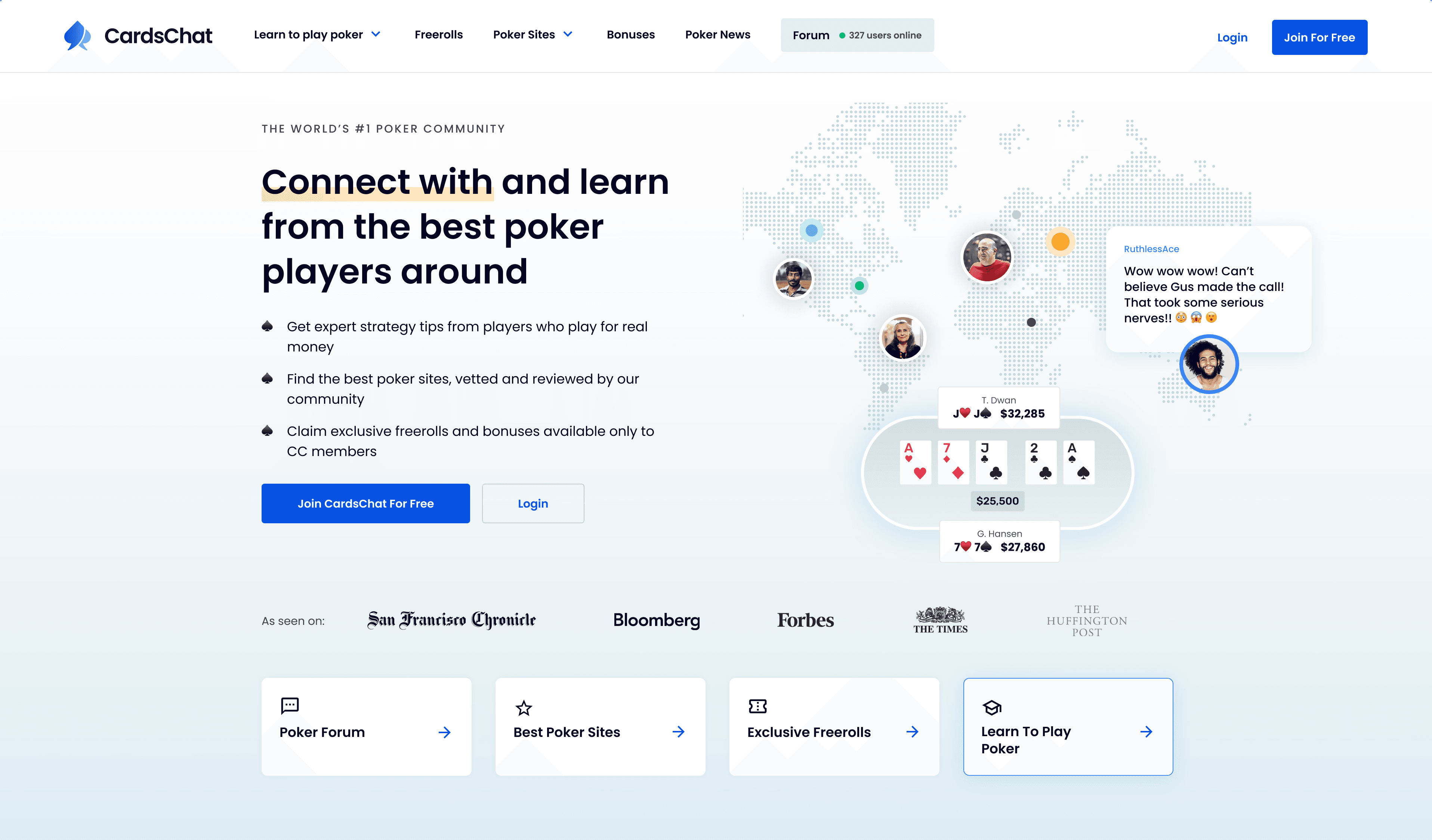
Homepage hi-fi design: The proposed homepage brought to life with the full new visual identity applied. Cleaner layout, clearer hierarchy and a design language built to appeal to a broader and younger audience, validated by a preference test in which 72% of participants chose it over the existing design.
Reflections
Even though it never made it to production, this is a project I am proud of. The preference test gave us real confidence that the new direction resonated with the right people (our end users), and when I presented the work internally to both the wider CC team and the Design and Research team, the response was overwhelmingly positive. But a shift in team priorities alongside a change in product ownership meant the momentum did not carry through. There was possibly also a degree of caution around making such a significant visual change in one go, and looking back I can understand that. A more incremental approach, or broader stakeholder alignment earlier in the process, might have given it a better chance of moving forward.
If there is one thing this project reinforced, it is that great work alone is rarely enough. Getting stakeholders and decision makers to believe in a vision is its own skill, and one that deserves as much attention as the design work itself.
Get Figma Version