
My role
Senior Product Designer
Project type
Greenfield product, new build
Duration
Team
Industry
The company's existing call centre platform had become impossible to scale, maintain or improve. Rather than patch it further, they made the decision to rebuild it entirely, and to build it as a white label product they could sell on to other businesses. The brief was as complex as it sounds: design a fully featured, enterprise-grade contact centre platform, fast enough to keep pace with a development team already in motion.
Overview
The company in question is a British communications software developer with over two decades in the industry. Their existing platform had served its purpose but had reached the end of its life, too outdated and too rigid to support the growth they needed. The decision was made to build a new cloud-based contact centre platform from scratch, one that could be sold on to other businesses as a white label product, complete with branding and configuration options for each client.
Codurance was brought in to deliver the front-end of the platform, and I joined the project a few weeks in, stepping into a designer role that had been temporarily vacant. The development team was already moving and needed designs to build against. There was no time for a lengthy discovery phase. I had to establish the visual direction, set up a working design system and start producing screens quickly enough to keep the project moving.
My Approach
One of the best early decisions I made was to adopt Untitled UI, a comprehensive and production-ready UI kit, as the foundation for the design system rather than building from scratch. In a project where speed was non-negotiable, this gave me an immediate head start, allowing me to produce high fidelity mockups at a pace that matched what the developers needed. I adapted and maintained the system throughout, extending it as new features required components that did not exist out of the box.
Some discovery work had already taken place before I joined, including user interviews with experienced stakeholders on the client side, and I used those insights to inform my early design decisions. Later in the project I conducted two rounds of research myself: a survey targeting selected client stakeholders to evaluate the IVR communication flow feature, and a visual design test assessing aesthetics, layout, navigation and consistency across a range of mockups. Usability testing remained on the wish-list throughout and never materialised, which was a genuine frustration.
At one point during the project we took the work directly to the client, running a live demo at their offices. Watching real stakeholders interact with the platform in person, seeing where their eyes went, where they hesitated and where things clicked, gave us a level of insight that no remote feedback session could replicate.
The platform was broad in scope. Features I conceived and designed included account management, call forwarding, call recordings, device management, inbound and outbound number configuration, schedules and opening hours, team and role management, a phonebook, hold music, location management for global businesses, agent status management, and white labelling capabilities. The feature I invested the most design thinking in was the IVR communication flow builder, a visual tool for building automated voice menus of the kind that routes callers through options when they first dial in.
Key Design Decisions
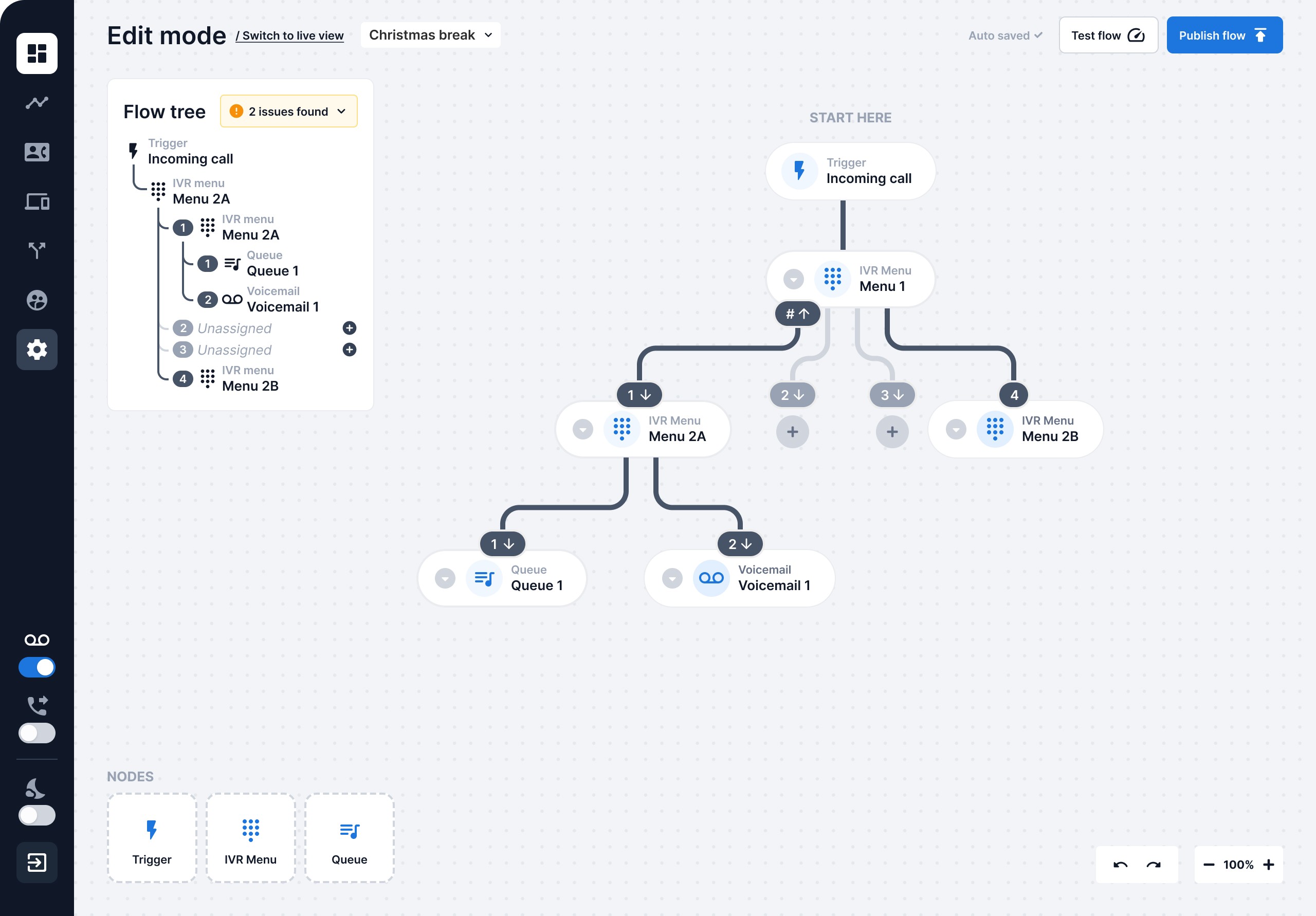
The IVR builder was the most complex feature on the platform and the one I am proudest of. The challenge was designing a tool that could handle significant technical complexity while remaining approachable for users who might have little or no experience in telephony. The solution was a visual, node-based flow builder: intuitive enough for a first-time user to navigate, powerful enough to satisfy the more experienced ones. Getting that balance right required careful thinking about progressive disclosure, clear labelling and a layout that made the logic of a call flow readable at a glance.
The white labelling feature was another considered piece of work. Designing a platform that other businesses would brand as their own meant building in flexibility from the start, not as an afterthought. Colour palette configuration, logo management and the ability to create a coherent branded experience within a consistent structural framework all had to be designed as a system, not a collection of settings.
Throughout, I worked in close collaboration with the front-end developers, ensuring that what I was designing was buildable within the constraints of the codebase and that the design system remained a shared, living reference rather than a Figma file that diverged from reality over time.
15+
distinct platform features designed end to end
2
rounds of user research conducted during the project
8-9 months
from joining the project to front-end delivery
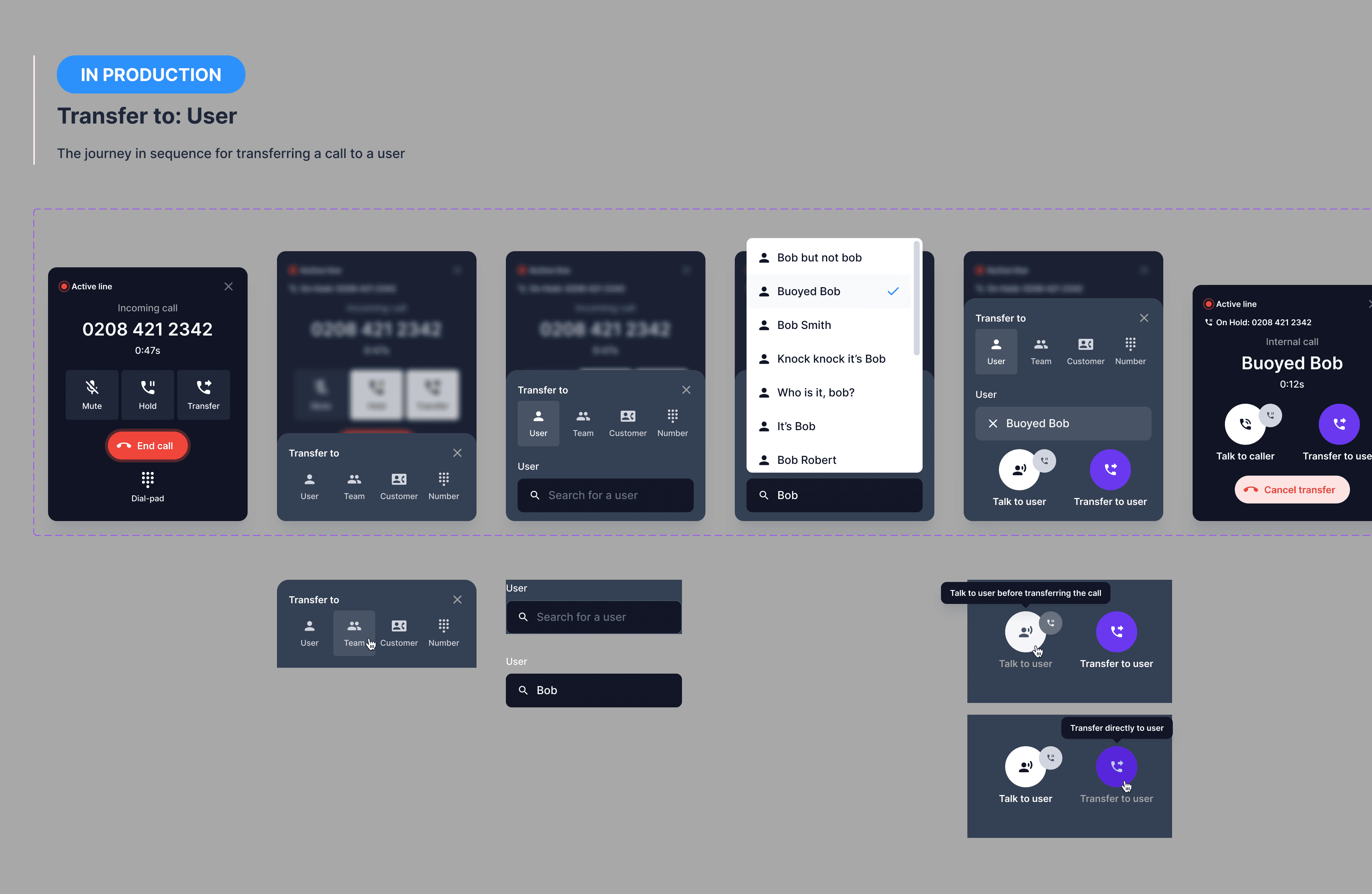
Mapping out the call transfer journey, from an active incoming call through to recipient selection and final handoff. This flow captures one of the sequence of UI states an agent moves through, including edge cases like user search and the option to consult before transferring.
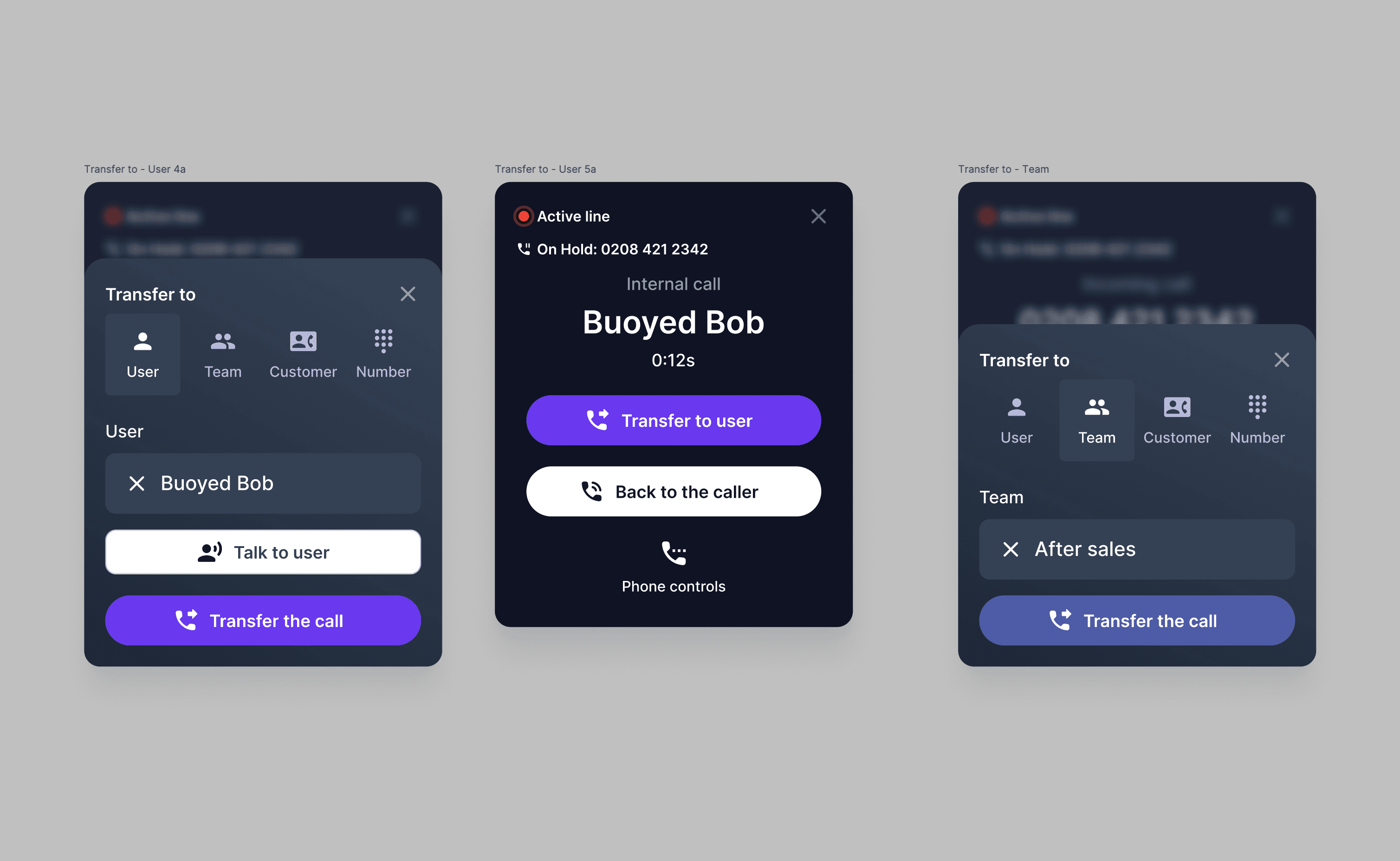
Transfer modal variations in detail. The left panel shows user selection with the option to speak first, the centre shows the mid-transfer state with the original caller on hold, and the right demonstrates team-based routing, a common path for after-sales or specialist escalations.
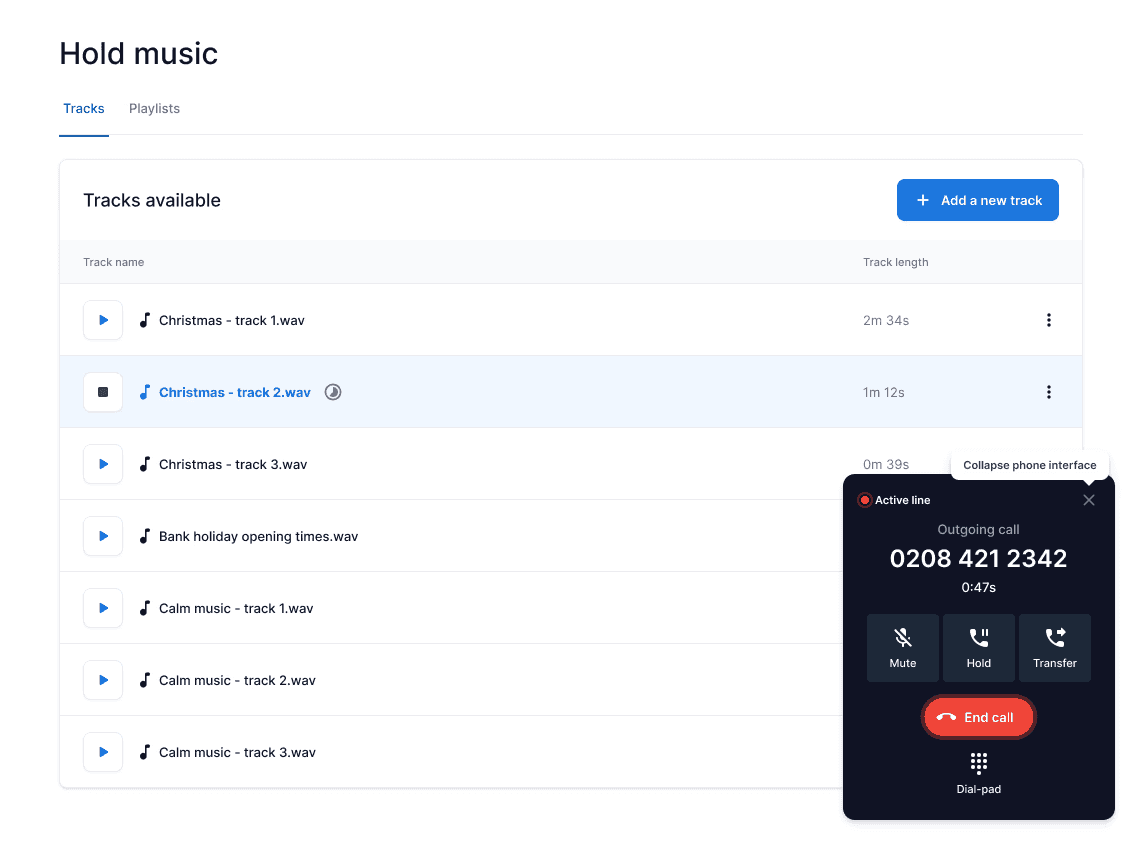
The hold music management screen with the softphone widget overlaid. This pairing reflects a key design principle: agents should be able to manage calls without leaving the context of whatever task they're working on. The persistent widget keeps controls accessible at all times.
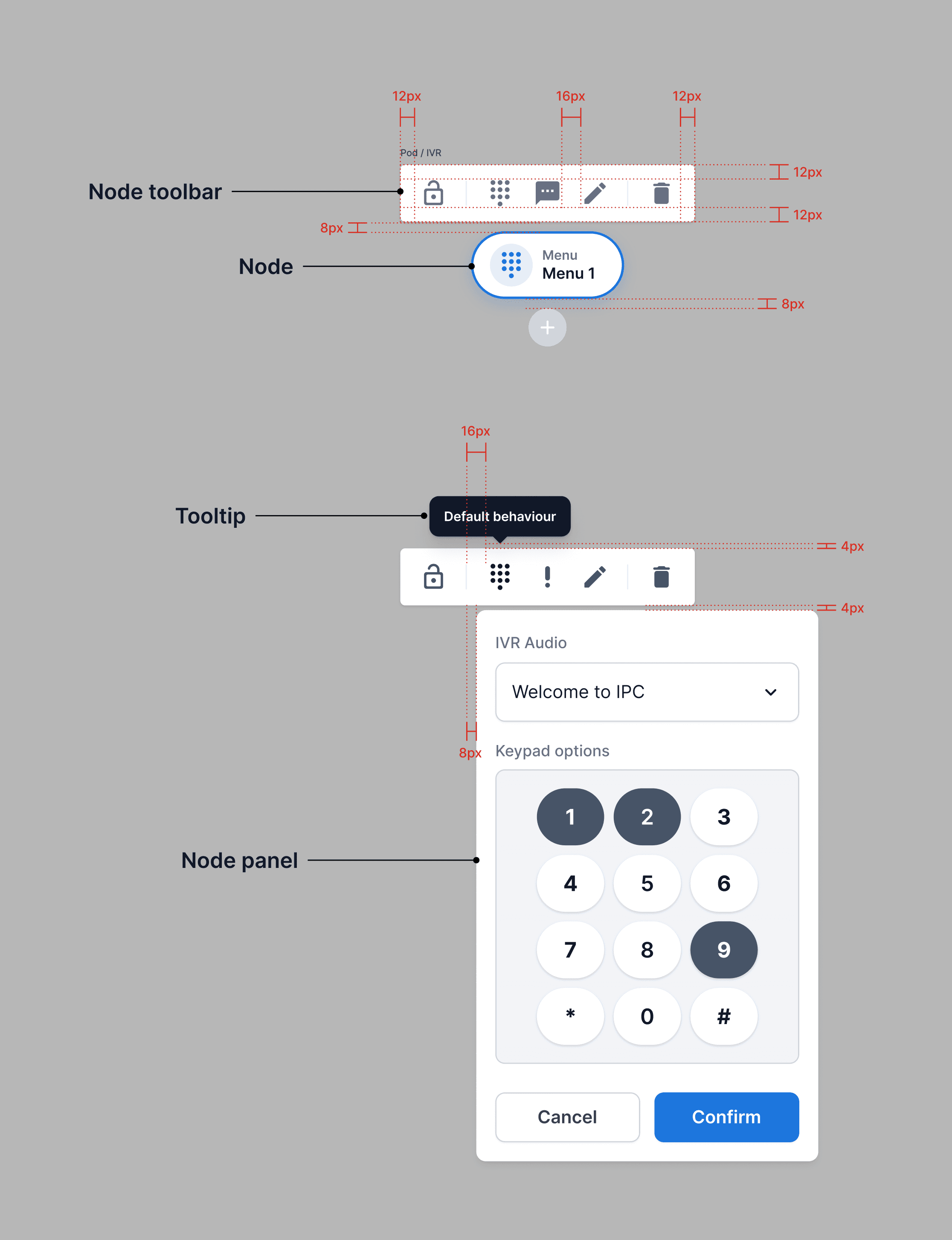
Component-level specifications for the IVR node system. This breakdown defines the anatomy of the node toolbar, individual nodes, contextual tooltips and the configuration panel, establishing the structural rules that keep the flow builder consistent as complexity scales.
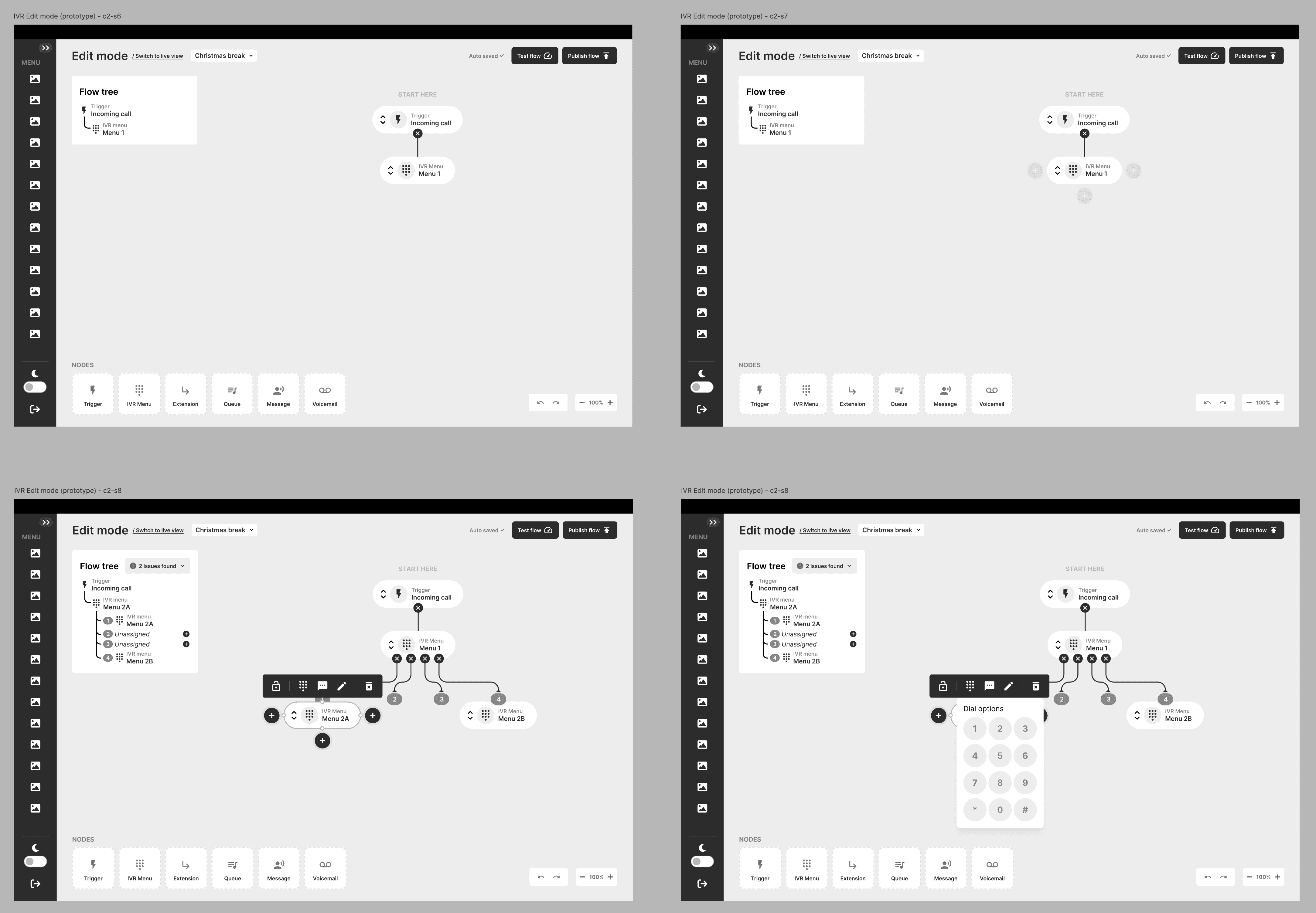
The IVR flow editor across increasing levels of complexity. Starting with a simple trigger-to-menu structure, then expanding into branching trees with multiple keypad options. The left-hand flow tree provides a structural overview while the canvas allows for spatial arrangement and direct manipulation.
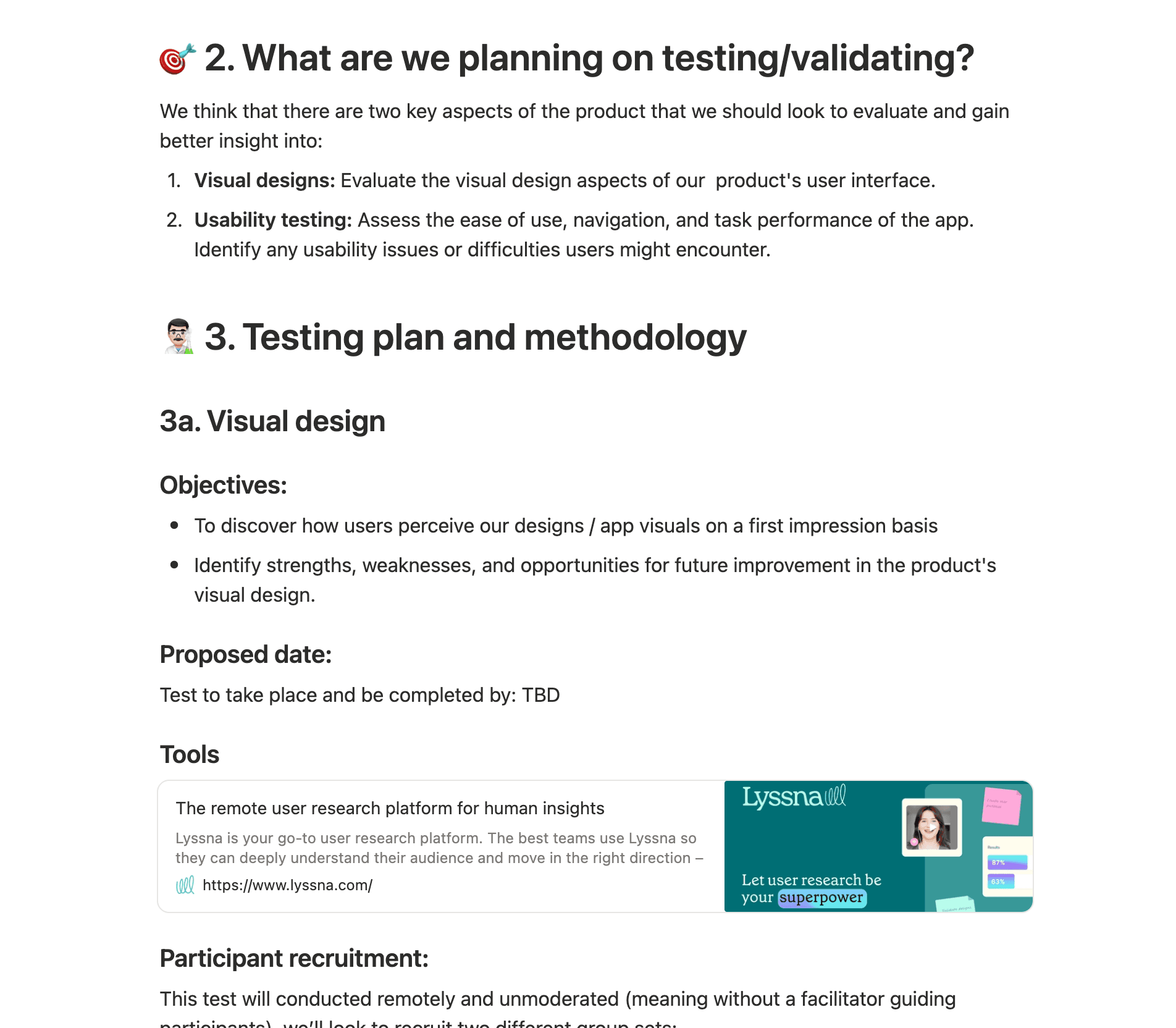
A Notion document outlining my proposed approach to testing, covering both visual design evaluation and usability validation. With usability testing out of reach, I prioritised what was achievable: a visual design test run through Lyssna targeting first impressions, layout clarity and overall consistency.
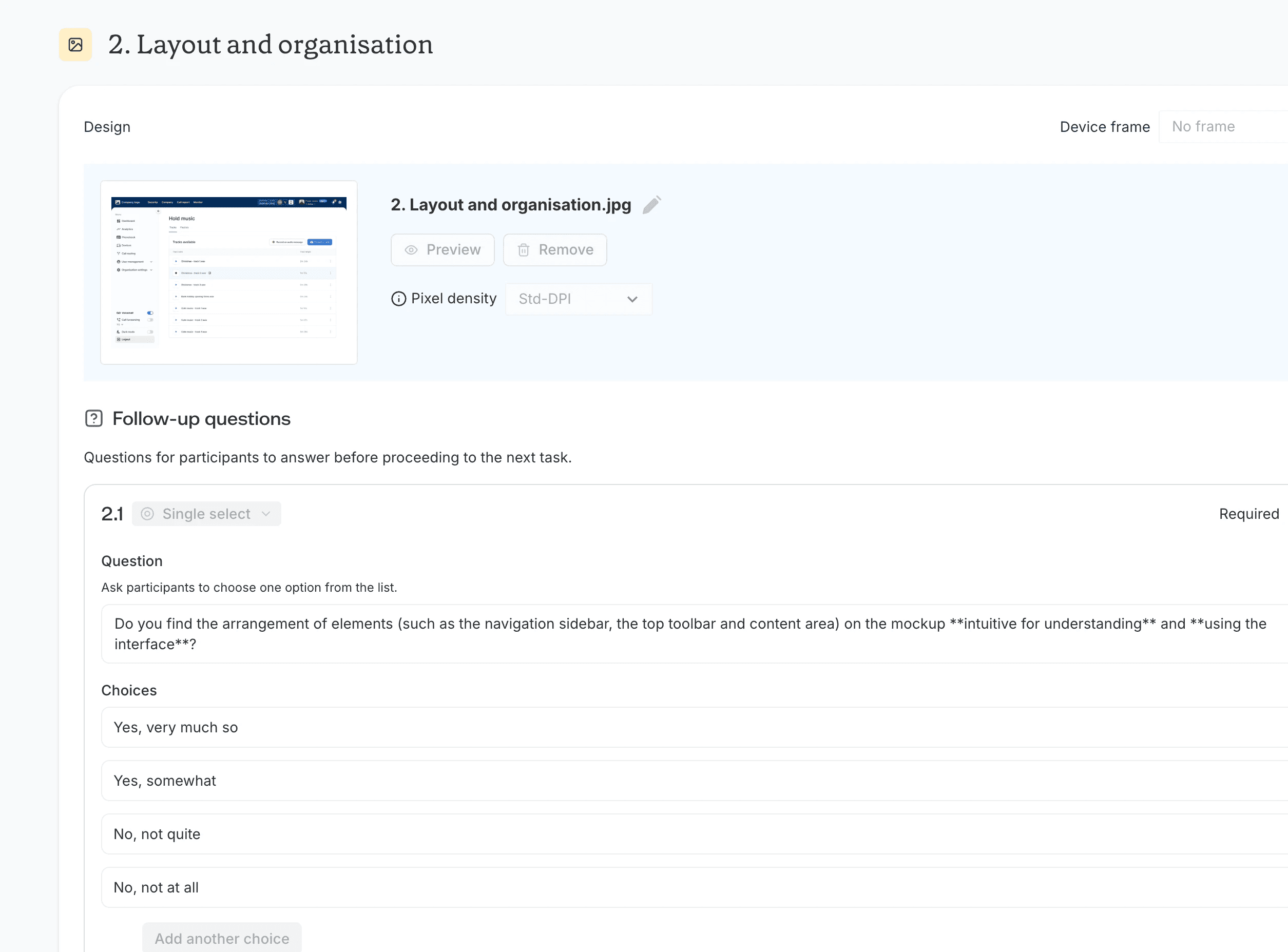
Configuring a test in Lyssna to assess layout and organisation. Participants were shown mockups and asked whether the arrangement of elements, sidebar, toolbar, content area, felt intuitive. This gave us lightweight but directional signal on structural clarity before development locked things in.
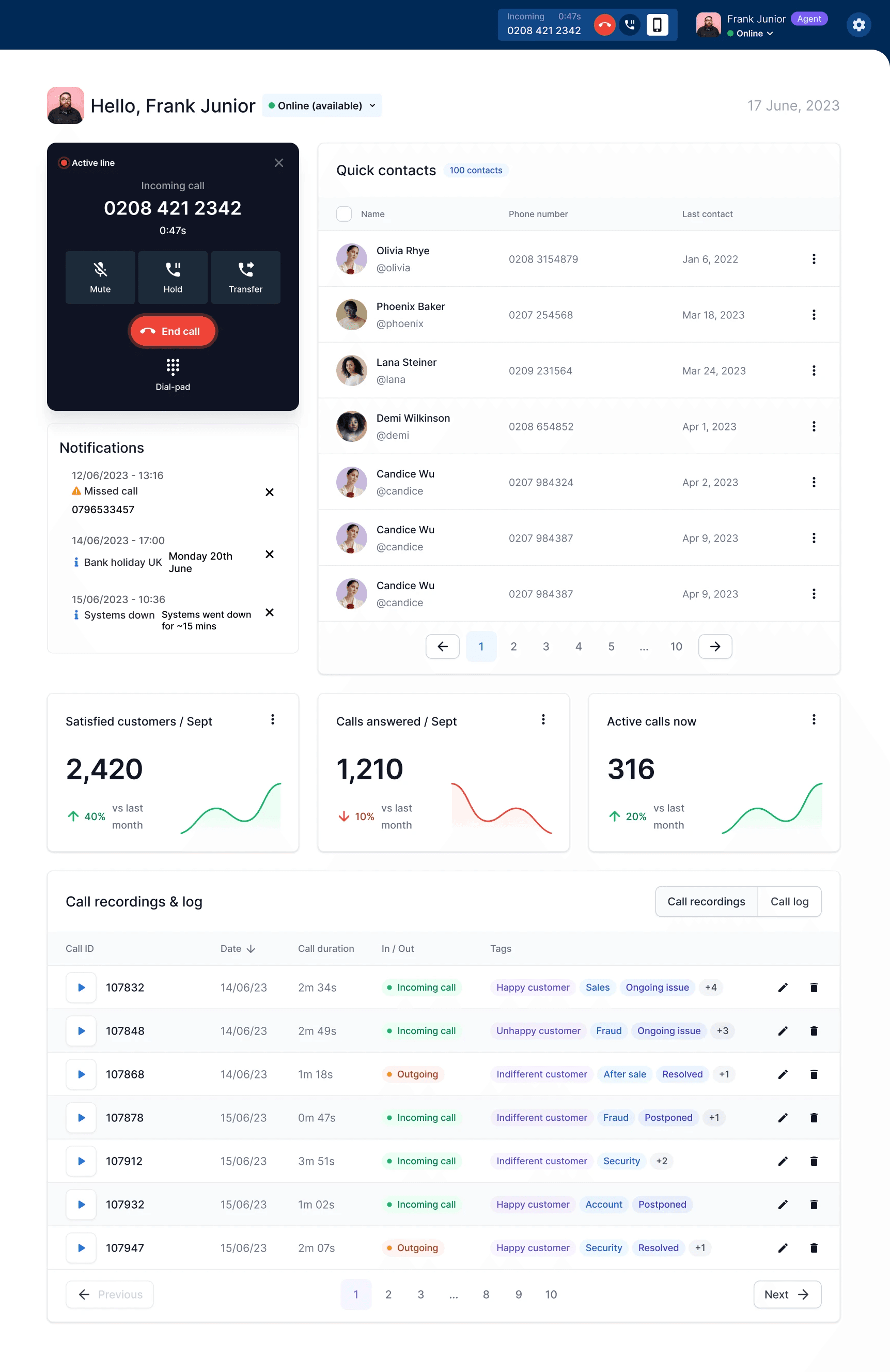
The agent dashboard, the primary workspace for day-to-day call handling. This screen brings together active call controls, quick contacts, system notifications, performance metrics and call recordings in a single unified view, designed to minimise context-switching during high-volume shifts.
Reflection
This was the project that taught me what it means to design under real pressure. Joining a team already in motion, with no time to pause and no luxury of a clean starting point, forces a kind of clarity and decisiveness that more comfortable projects do not. You learn to make good decisions quickly and to trust your instincts.
The IVR builder remains one of the most technically demanding features I have designed, and one of the most satisfying. Getting something genuinely complex to feel simple is harder than it looks, and I think we got it right.
The regret is obvious: the platform did not launch within the duration of our contract, not through any failure on our part but because of internal challenges on the client side that were beyond anyone's control. Delivering work you cannot yet point to in the wild is a strange feeling, particularly when you know the quality of what was built. What I take from it is the importance of being clear-eyed about what you can and cannot control, doing the work to the highest standard regardless, and not letting the outcome define the contribution.
Get Figma Version